Put the Power Plant on the Farm - Part 4 of 5
What if some of the electricity your farm needs didn't have to come from the grid at all?
There's a misconception about agricultural solar that we encounter constantly.
People think the goal is to take a farm “off grid.”
That is something we can do, but it isn't the point. "Off grid" is great, but 'independent of the grid,' now that is even better!
The better idea is much simpler:
Produce electricity where you're already consuming it.
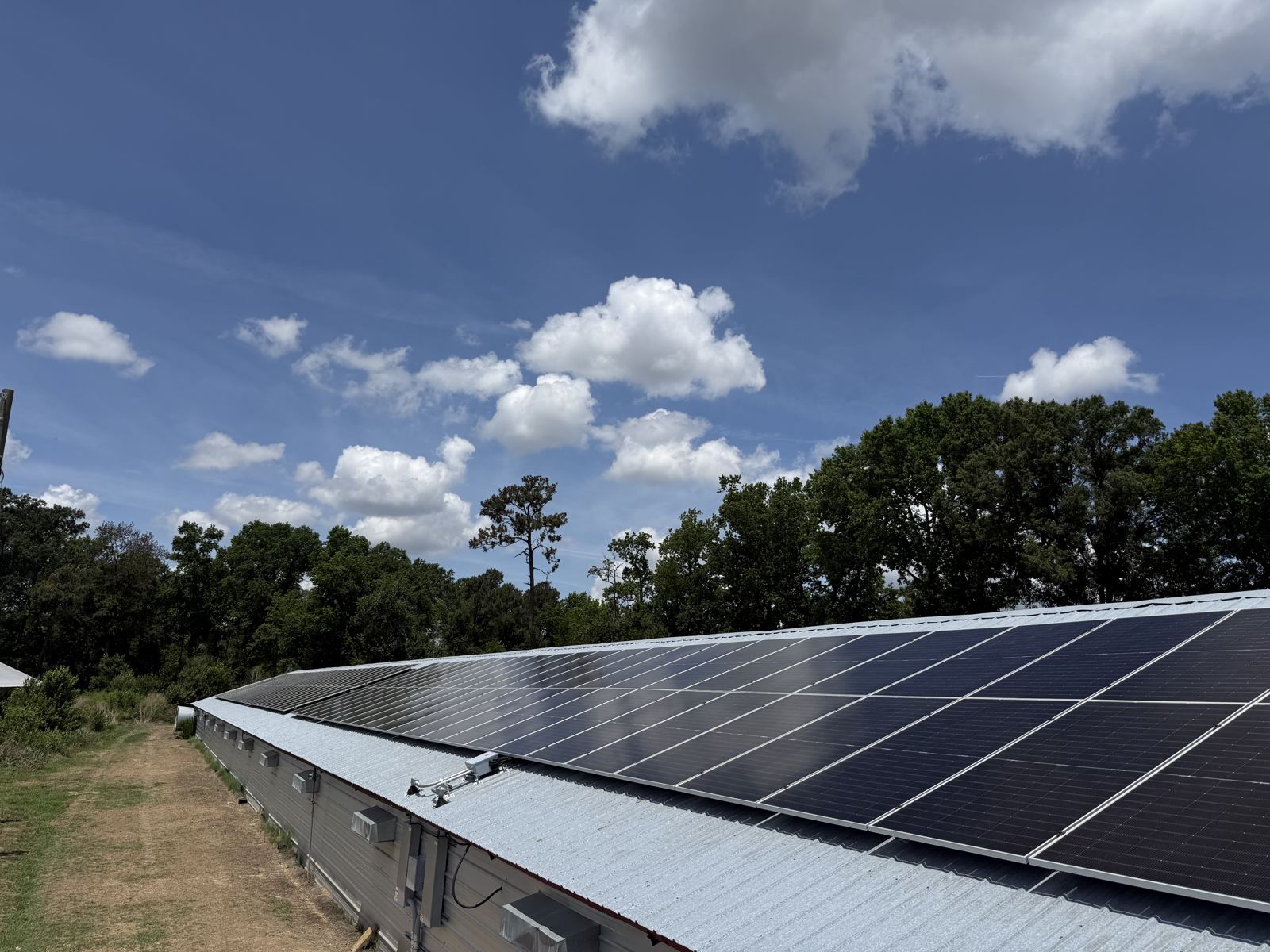
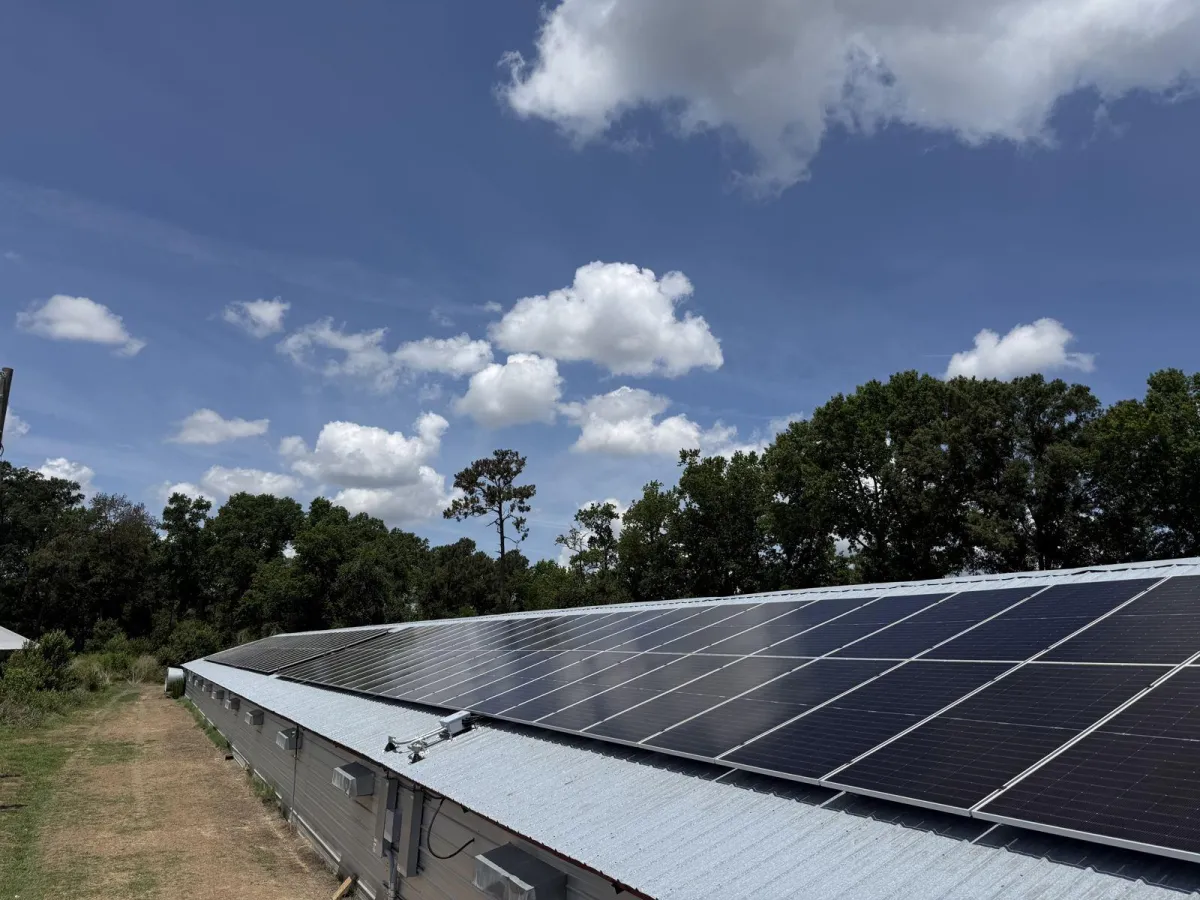
Consider a poultry farm in full operational swing at 1:00 p.m. on a sunny July afternoon.
The sun is beating down.
Temperatures are climbing.
Tunnel fans are running.
Cooling systems are operating.
Electrical demand is climbing to its peak.
And shining down on every chicken house, on every barn, on every equipment storage buildings, on every square foot of space, and on every adjacent property is an enormous energy resource: sunlight.
A properly designed behind-the-meter solar system converts that resource into electricity the farm can use.
Instead of purchasing every required kilowatt-hour from the utility, the property becomes capable of producing part of its own energy.
The utility doesn't disappear.
Your dependence on it changes.
That's fundamentally different from building another centralized power plant.
America absolutely needs utility-scale generation, transmission and grid investment.
But distributed generation approaches the problem from the opposite direction.
Instead of electricity traveling from:
Power plant → transmission lines → utility company → substation → distribution lines → farm
We can build systems where electricity can travel:
Solar panel → microinverter → farm equipment
That's an extraordinarily short commute.
And we're already seeing where new generation is heading.
Many experts are now projecting that new solar installations will average approximately 40 GW each year starting in 2026 through 2030, with battery storage adding roughly another 15 GW annually.
There's a reason.
Solar is modular.
It can be deployed relatively quickly.
It has NO fuel requirement.
And it can be installed at the point where electricity is actually consumed.
For agricultural businesses with substantial daytime electricity consumption and long-term ownership of their property, those characteristics are particularly useful.
Solar doesn't solve every grid problem - although it does solve most, as long as you have net metering. (all SC utilities are required to offer net metering with dollar for dollar credits to pull from to power you at night from the energy your system produced during the day)
It doesn't deploy electricity during an outage without storage. Interconnection rules matter. Utility tariffs matter. System design matters. Financing matters.
But that's precisely why agricultural solar should be evaluated as infrastructure, not a commodity.
The question isn't:
“How many panels can we fit?”
It's:
“How much electricity does this farm consume, when does it consume it, what does that electricity cost, and what generation strategy creates the best economic result?”
That's how American AgriSolar approaches a project...by evaluating how we can save you the MOST money now AND set you up for financial success in the future. We are playing the long game and providing immediate relief to those who need it.
NEXT: Part 5 —The Farm as a Power Plant
What energy independence actually means—and why the farms that produce America's food can increasingly produce their own power, too.